
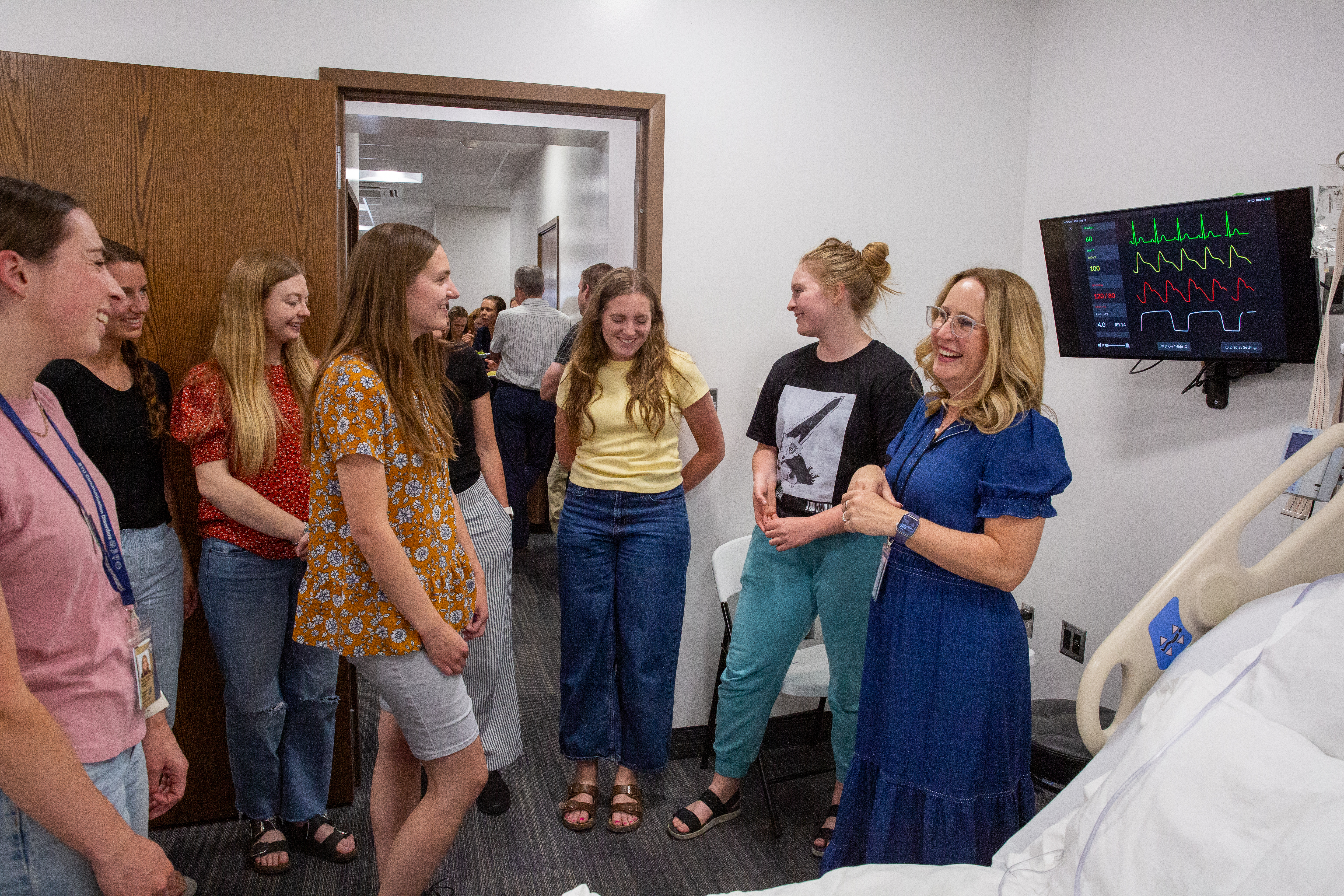
Undergraduate and graduate students in the Communication Disorders Department now have the opportunity to practice patient care with love, compassion and empathy in the department's newly opened Hospital Simulation Room.
The room is equipped with a hospital bed, simulated headwall, IV pump, vital signs monitor, patient communication board and other medical equipment. It is designed to simulate a hospital setting where students can practice patient care and interdisciplinary collaboration. While these procedures are thoroughly discussed and debriefed in the classroom, nothing builds confidence like hands-on experience.
Sophia Martin, an undergraduate studying communication disorders, said, "Every time you walk into a new patient room, there's going to be a new person with different comforts, different discomforts, and different experiences."
Patient interaction plays a major role in audiology, speech-language pathology and many other communication disorders careers.
"Learning how to present yourself in this context makes it easier because if you know what your role is, it's a lot easier to focus on what the patient needs," Martin said.
The opening ceremony gave students and faculty an opportunity to tour the room, test the equipment and watch a live student simulation. Tracy Lui, an assistant teaching professor, and several colleagues assembled the room to provide students with an authentic clinical learning experience.
"We were super resourceful," Lui said. "Because we wanted it to be a really authentic experience for our students."
Much of the equipment came from surplus sales and donations. Together, the equipment creates a realistic hospital setting where students can practice with student models and actors.
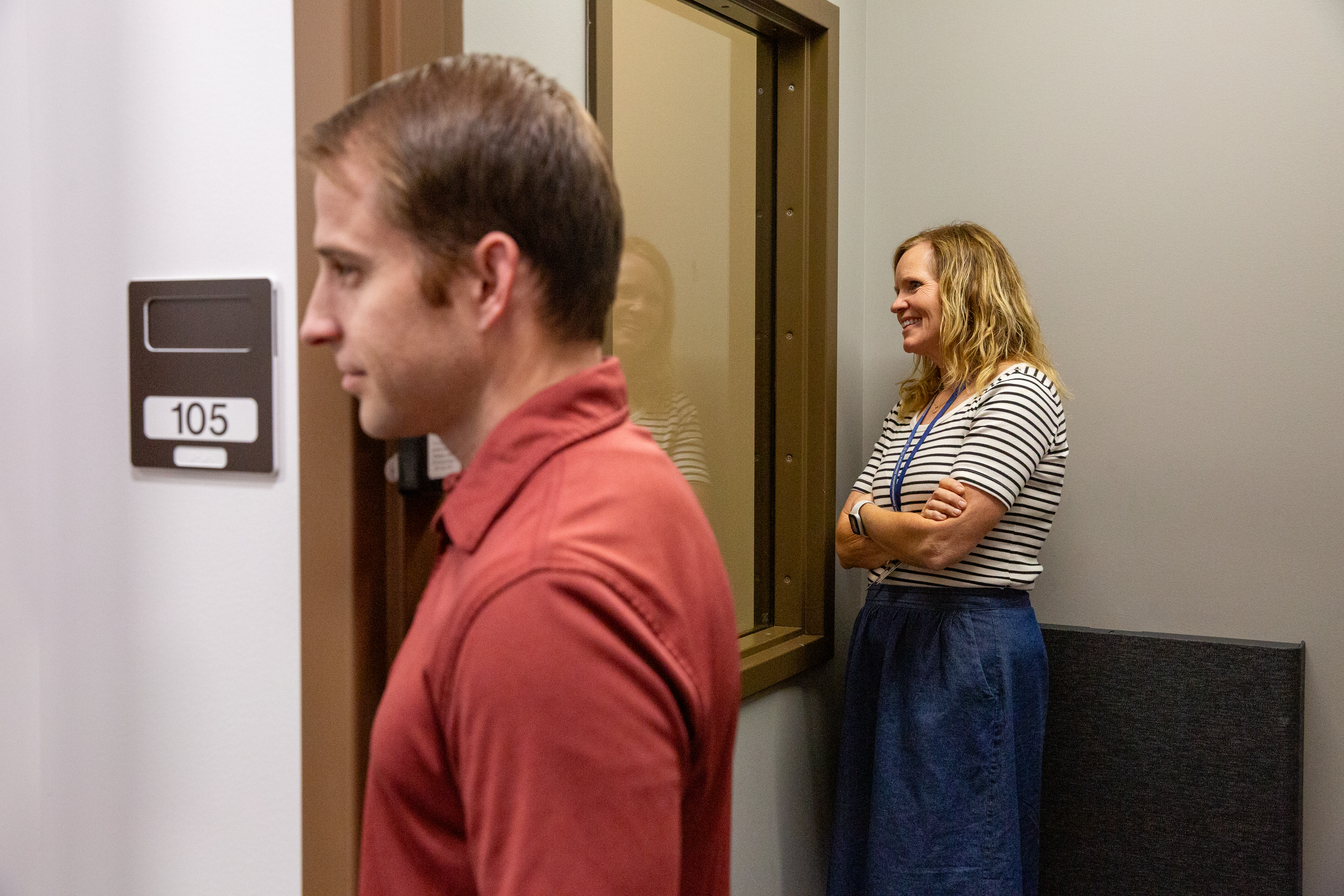
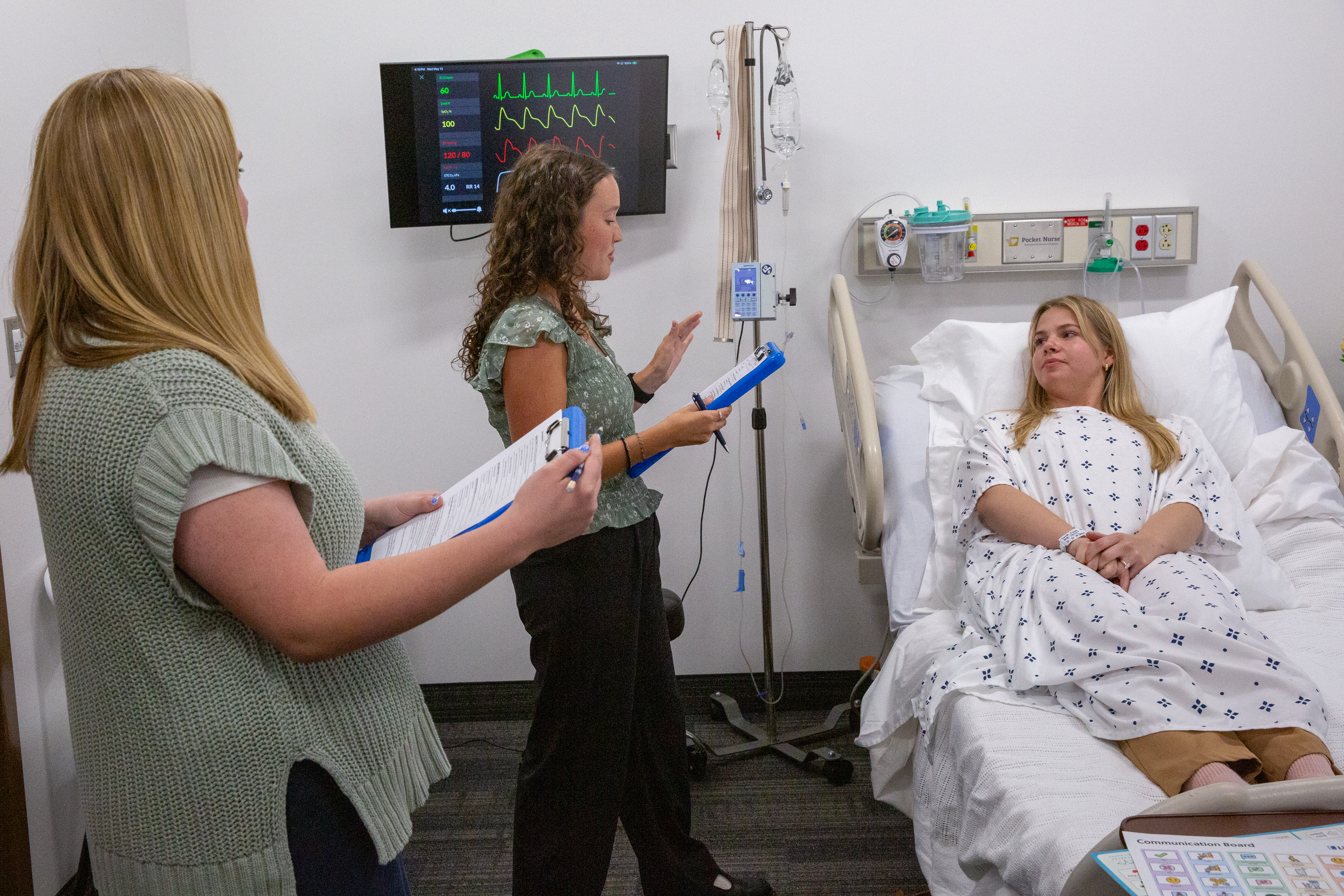
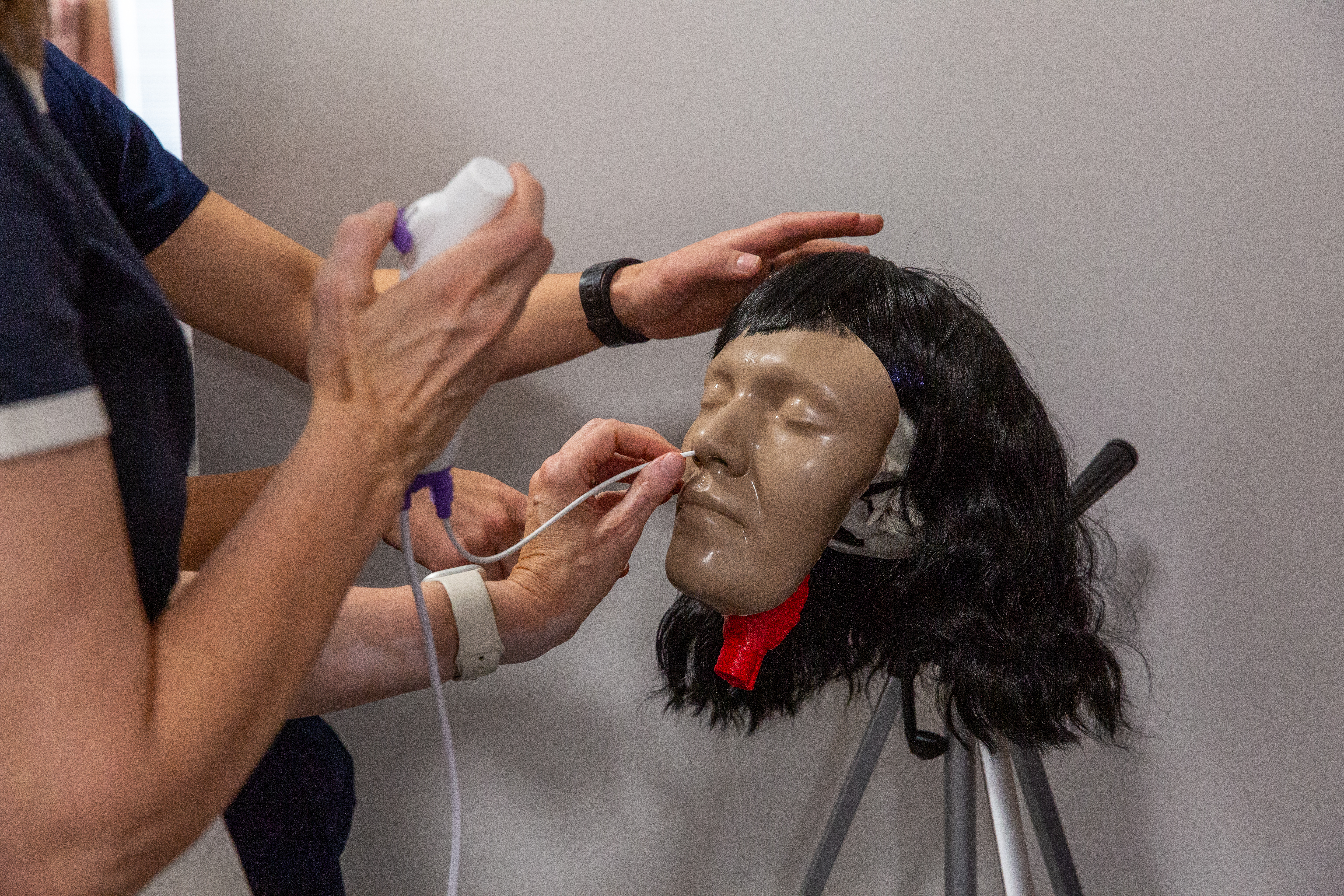
Although the hospital room has been in development for some time, some students were able to use it in their classes this past year. Lui recalled one graduate student's experience practicing swallowing evaluations.
"I remember one time in particular, a student was out here waiting, and she was so nervous going in. She had never been in a hospital before, and although we had done a lot of debriefing, she was still very nervous. When she came out, she was like, 'Oh, my goodness, I did that, I did that! I actually think I can do this now.'"
"I just love seeing the confidence that they have because they go on to do externships in hospitals, and sometimes they are so overwhelmed by the equipment and everything that they are just so nervous," Lui said.
Experiences like these, help students enter the workforce with greater confidence.
Sarah Palmer, a graduate student studying communication disorders, said, "I'm jealous of the grads who had this experience because the more exposure you get, the more confident you feel in a hospital setting."
That confidence benefits not only students but also their patients. Patients are more likely to feel calm and trusting when students provide confident, compassionate care.
Lui said the room's impact extends beyond student training. These simulations help students learn to care for patients with compassion, especially those experiencing high levels of stress.
"The Hospital Simulation Room has new, state-of-the-art fiberoptic endoscopic equipment for instrumental swallow evaluations that can be used on a head model or with real patients in the BYU Speech and Language Clinic, benefiting people in the community," Lui said.
The equipment is used not only for instruction and practice but also to provide care for patients in the community.
Education in the McKay School is about more than earning a degree. It is about preparing the next generation of students to serve with confidence, compassion and professional skill. The Hospital Simulation Room will be an important resource as students gain the experience they need before entering clinical practice.